
How to Choose a Medical Animation Company: 7 Critical Questions Healthcare & Biotech Leaders Must Ask
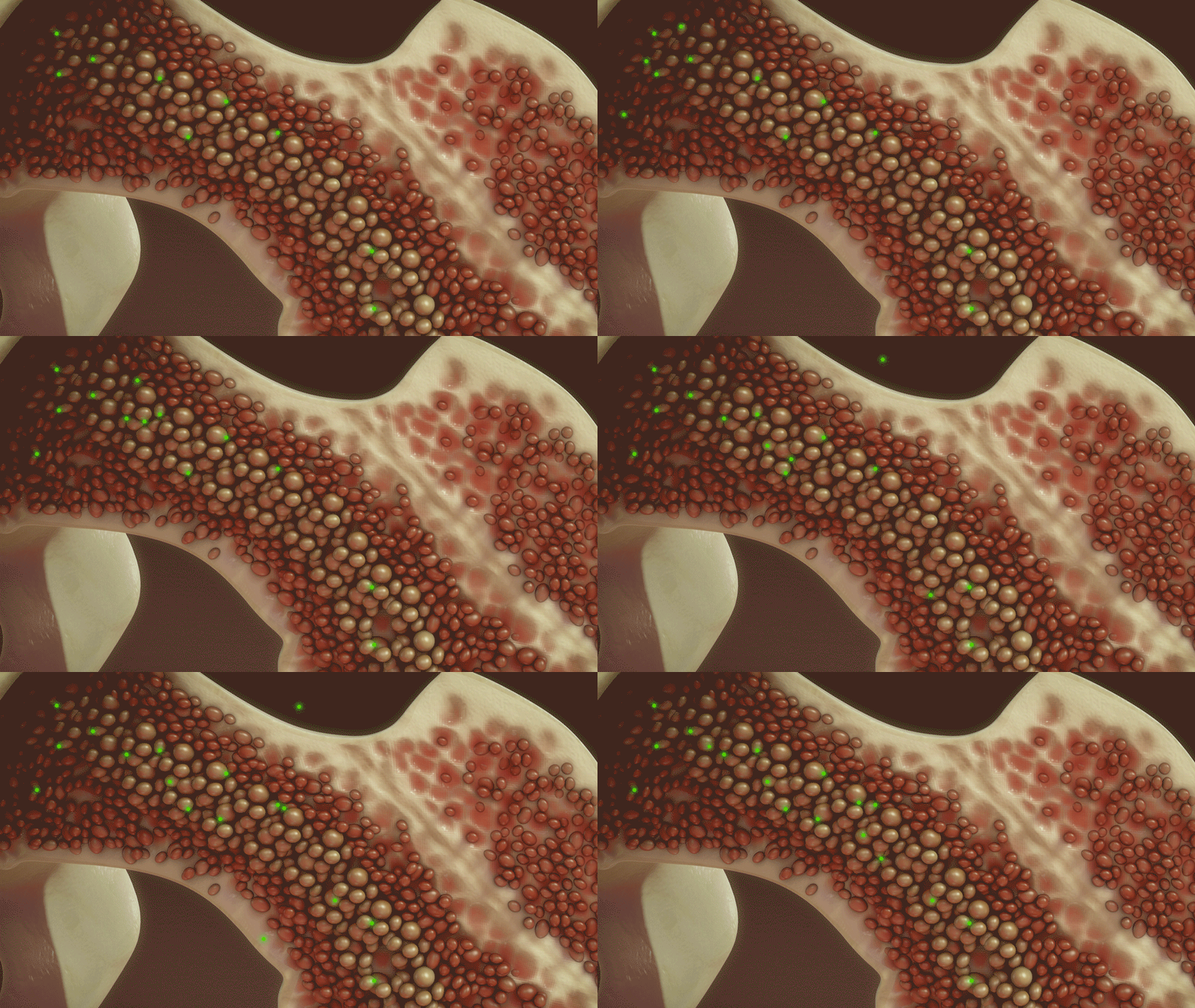
Executive Summary: The High Stakes of Medical Animation
- The Regulatory Reality: Unlike consumer advertising, medical animation directly impacts FDA / CE mark submissions, physician prescribing habits, and investor funding rounds. A single anatomical inaccuracy can stall an MLR approval or trigger regulatory scrutiny.
- The Generalist Agency Trap: Commercial advertising agencies and solo freelancers often lack the scientific background to interpret clinical protocols, resulting in constant friction, anatomical blunders, and blown project deadlines.
- The Vetting Framework: This guide provides a 7-question vetting matrix covering biomedical literacy, CAD/molecular data pipelines, MLR review checkpoints, IP protection, modular multi-channel deliverables, and transparent pricing.
- Budget Benchmarks: High-precision medical animations range from $4,500 to $8,500/min for surgical device mechanics, and $8,000 to $15,000+/min for complex pharmaceutical Mechanism of Action (MoA) cellular pathways.
If you are tasked with selecting a medical animation company for a new medical device launch, biotechnology capital raise, or pharmaceutical Mechanism of Action (MoA) campaign, you are operating in one of the most high-stakes visual communication environments in the world.
In software or consumer marketing, creative license is harmless. If a button in a SaaS product video is slightly misaligned, no one is harmed. In healthcare, however, visual communication must navigate rigorous regulatory thresholds, complex biological systems, and skeptical medical specialists. If an animator renders an endovascular stent deploying into a vessel without accurate hemodynamic blood flow, surgeons immediately notice and dismiss the asset. If an oncology animation misrepresents receptor binding kinetics, your internal Medical, Legal, and Regulatory (MLR) review committee will instantly reject the deliverable.
Finding the right medical animation services partner means separating slick marketing talk from actual biomedical capability. Before executing an agreement or issuing a Request for Proposal (RFP), here are the seven critical questions your executive team must ask prospective studios.
01. Does the Studio Possess In-House Biomedical Literacy (Or Will You Have to Teach Them Biology)?

The single greatest cause of budget overruns and timeline delays in healthcare animation is scientific illiteracy. General commercial animation studios often accept medical contracts without understanding the science, assuming they can simply “figure it out” from your slide deck.
When you work with a specialized 3D medical animation studio, their team should be able to read and synthesize:
- Peer-Reviewed Literature & PubMed Papers: They should grasp the biological mechanisms described in the source studies without requiring hours of hand-holding from your Chief Medical Officer.
- Clinical Trial Protocols & Investigator Brochures (IB): They must understand primary endpoints, drug delivery pathways, and cellular receptors.
- Surgical Technique Manuals: For medical devices, the studio must accurately translate anatomical planes, surgical incisions, and deployment steps into visual 3D space.
02. What is Their Technical 3D Pipeline for Engineering CAD & Molecular Data?
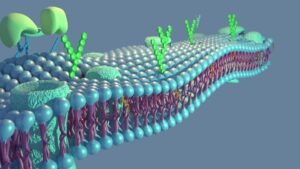
Medical visual effects depend on high-fidelity data pipelines. You cannot rely on an artist hand-sculpting a cardiovascular catheter or guessing protein tertiary structures. Inquire specifically about their software capabilities:
For Medical Device & Surgical Hardware Companies:
Can their 3D pipeline ingest native mechanical engineering CAD formats (such as SolidWorks, STEP, IGES, and PTC Creo) without polygon deformation or mesh tearing? When producing assets for our medical device animation services, precision tolerances are vital. If the studio asks you for simplified OBJ or FBX meshes, they may lack the industrial pipelines needed to handle complex multi-part surgical assemblies.
For Pharmaceuticals & Biotech (MoA):
Does the studio pull authentic atomic coordinates directly from the Protein Data Bank (RCSB PDB)? Authentic pharmaceutical animations require accurate conformational changes, electrostatic surface models, and receptor pocket dynamics rendered with volumetric lighting and subsurface scattering (SSS) to simulate translucent cellular environments.
The 2026 AI Frontier: How Does the Studio Leverage Generative AI (Higgsfield, Nano Banana, Seedance) vs. Deterministic 3D?
A major industry evolution in 2026 is the adoption of next-generation generative AI creative suites within professional animation workflows. Forward-thinking studios now utilize tools like Higgsfield AI, alongside state-of-the-art models like Nano Banana and Seedance, to accelerate the front-end creative development pipeline:
- Rapid Concepting & Look-Dev with Nano Banana: During early discovery, models like Nano Banana enable art directors to generate studio-grade 4K conceptual moodboards, histological lighting styles, and speculative micro-cellular environments in hours rather than weeks—aligning creative vision before expensive 3D asset modeling begins.
- Cinematic Camera Trajectory with Higgsfield: Higgsfield empowers directors to experiment with dynamic camera motion paths, sweeping perspective shifts, and focal depth before building complex 3D scenes.
- Multi-Shot Dynamic Pre-vis with Seedance: High-end multimodal video models like Seedance allow creative squads to generate rapid narrative animatic clips with synchronized audio, evaluating dramatic flow and scene pacing early in the storyboard phase.
03. How Does Their Production Pipeline Interface with Your MLR / Regulatory Review Board?
In healthcare, creative production must adapt to institutional governance. Pharmaceutical and MedTech marketing assets must be formally approved by internal Medical, Legal, and Regulatory (MLR) review committees, or software platforms like Veeva Vault PromoMats.
If a studio works linearly without structured validation checkpoints, a single regulatory objection on a final rendered video can force a complete rebuild—wasting weeks of compute time and thousands of dollars. The company you hire must enforce a disciplined, 6-stage milestone workflow:
- Milestone 1: Scientific Scripting & Claim Annotations: Writing the narration with comprehensive literature references mapped line-by-line for compliance sign-off.
- Milestone 2: 2D Scientific Storyboard: Visualizing every camera angle, framing, and on-screen label prior to 3D construction.
- Milestone 3: 3D Animatic (Greybox Camera Pre-Visualization): Low-resolution, untextured 3D timing renders showing spatial pacing, camera travel, and anatomical transitions. This is where your medical board locks anatomy before rendering.
- Milestone 4: Shading, Texturing & Look-Development: Establishing tissue translucency, fluid dynamics, lighting palettes, and brand aesthetics.
- Milestone 5: High-Resolution GPU Rendering: Multi-pass volumetric rendering in 4K resolution.
- Milestone 6: Audio Mastering & Voiceover Sync: Professional medical voiceover with exact phonetic pronunciations, sound effects, and compliance captioning.
Ensure your agreement defines how many revisions are included at each milestone. Fixing anatomical geometry in an untextured greybox animatic takes two hours; fixing it after high-resolution final render takes days.
04. How Do They Safeguard Pre-Patent IP, Data Security, and Confidentiality?
Medical device prototypes and novel biotech molecules frequently undergo animation production months before provisional patent filings or public Phase III trial readouts. If your confidential CAD files or clinical data leak, the financial and regulatory damage is catastrophic.
Demand clear verification of their operational data security posture:
- Comprehensive Bilateral NDAs: Does the studio sign comprehensive corporate NDAs that explicitly bind all animators, technical directors, and voice talent?
- Encrypted Storage & Secure Transfer: Are client CAD and clinical files transmitted via encrypted protocols and stored on access-controlled local servers, rather than insecure public cloud folders?
- Air-Gapped Rendering & No AI Scraping: Does the studio guarantee your proprietary CAD designs are never uploaded to unvetted third-party public cloud generators or scraped by machine-learning engines?
05. What Derivative & Omnichannel Modular Assets are Included in the Scope?
A common mistake life sciences brands make is treating 3D animation as a single 90-second video asset. In 2026, healthcare marketing requires omnichannel deployment. When the studio builds 3D models of your medical device, surgical procedure, or cellular pathway, that 3D environment represents a versatile digital asset library.
Before inking your contract, verify whether the studio will provide modular derivatives alongside your primary master video:
1. Medical Congress Booth Loops
15-to-30-second silent, high-impact looping videos optimized for large 4K LED booth walls at ASCO, AHA, or MedTech conferences.
2. High-Res 8K Still Renders
Uncompressed print-resolution still renders for clinical poster presentations, peer-reviewed journal figures, and investor pitch decks.
3. Social & Digital Cutdowns
Bite-sized 15-second vertical (9:16) and square (1:1) clips crafted for targeted LinkedIn healthcare campaigns and physician outreach.
4. Alpha Channel Web Elements
Transparent background WebM / MP4 video loops of your device rotating for seamless integration into your website layout.
06. How Transparent is Their Pricing Structure, and What Are the Real Cost Benchmarks?
Medical animation pricing varies widely depending on biological complexity, anatomical accuracy, and visual detail. Transparent studios provide flat-fee milestone contracts rather than open-ended hourly billing that exposes your budget to scope creep.
Based on our studio data and industry benchmarks detailed in our 3D Medical Animation Cost Guide, here is what enterprise teams should realistically expect to invest in 2026:
07. Specialized Medical Studio vs. Generalist Agency vs. Solo Freelancer: What Are the Real Trade-Offs?
Procurement teams often compare bids from three distinct categories of animation providers. Understanding their structural differences will protect your project from costly mismatches:
Portfolio Red Flags: 4 Signs to Reject an Animation Proposal
- The “Rubbery Tissue” Trap: Organs and vascular tissues should have subtle organic resistance, elasticity, and authentic specular highlights. Beware of portfolios where anatomical structures look like stiff plastic toys or bouncy rubber balls.
- Generic Stock Molecular Blobs: A quality MoA studio models true biochemical structures. If their portfolio shows identical generic spherical ‘receptor blobs’ for every client, they are relying on cheap stock assets rather than actual PDB data.
- Camera Movement That Causes Disorientation: Fast, erratic 360-degree camera spins are used by amateur studios to mask a lack of anatomical modeling detail. Professional medical directors favor purposeful, stable camera moves that guide surgeon focus to the critical intervention.
- No Medical References in the Portfolio: If the studio cannot provide specific case studies from MedTech manufacturers, biotech firms, or clinical research institutions, you are their experimental test case.
Frequently Asked Questions About Choosing a Medical Animation Company
How long does a custom 3D medical animation project take from kickoff to final render?
A standard 60 to 90-second scientific animation typically requires 4 to 7 weeks. This timeline accommodates scriptwriting, scientific literature review, 2D storyboarding, 3D greybox animatic pre-visualization, cellular look-development, and internal Medical, Legal, and Regulatory (MLR) review board cycles.
What source files do pharmaceutical or device companies need to provide to start animation production?
For medical devices, studios require engineering CAD models (STEP, IGES, or SolidWorks files). For pharmaceutical and biotechnology Mechanism of Action (MoA) films, teams provide clinical study protocols, investigator brochures, peer-reviewed PubMed citations, and specific Protein Data Bank (PDB) structural identification codes.
How much does professional 3D medical animation cost in 2026?
Commercial 3D medical animation generally ranges from $4,500 to $8,500 per finished minute for surgical procedures and medical device engineering demos. Complex pharmaceutical Mechanism of Action (MoA) animations requiring microscopic molecular modeling, volumetric cellular lighting, and custom sound mastering range from $8,000 to $15,000+ per finished minute.
Who owns the intellectual property and copyright of the final medical animation?
Reputable medical animation studios grant 100% full commercial copyright buyout to the client upon final payment milestone. This grants your organization unrestricted global distribution rights across medical congresses, investor presentations, physician training, digital marketing, and TV broadcast without recurring licensing royalties.
Ready to Turn Your Product into a High-Converting Story?
At North Animation Studio, we turn complex SaaS products, medical devices, and industrial technology into clear, high-converting visual stories. Calculate your tailored project quote in under 60 seconds.