
How to Build a Safety Induction Video That Saves Training Hours (and Reduces Liability)
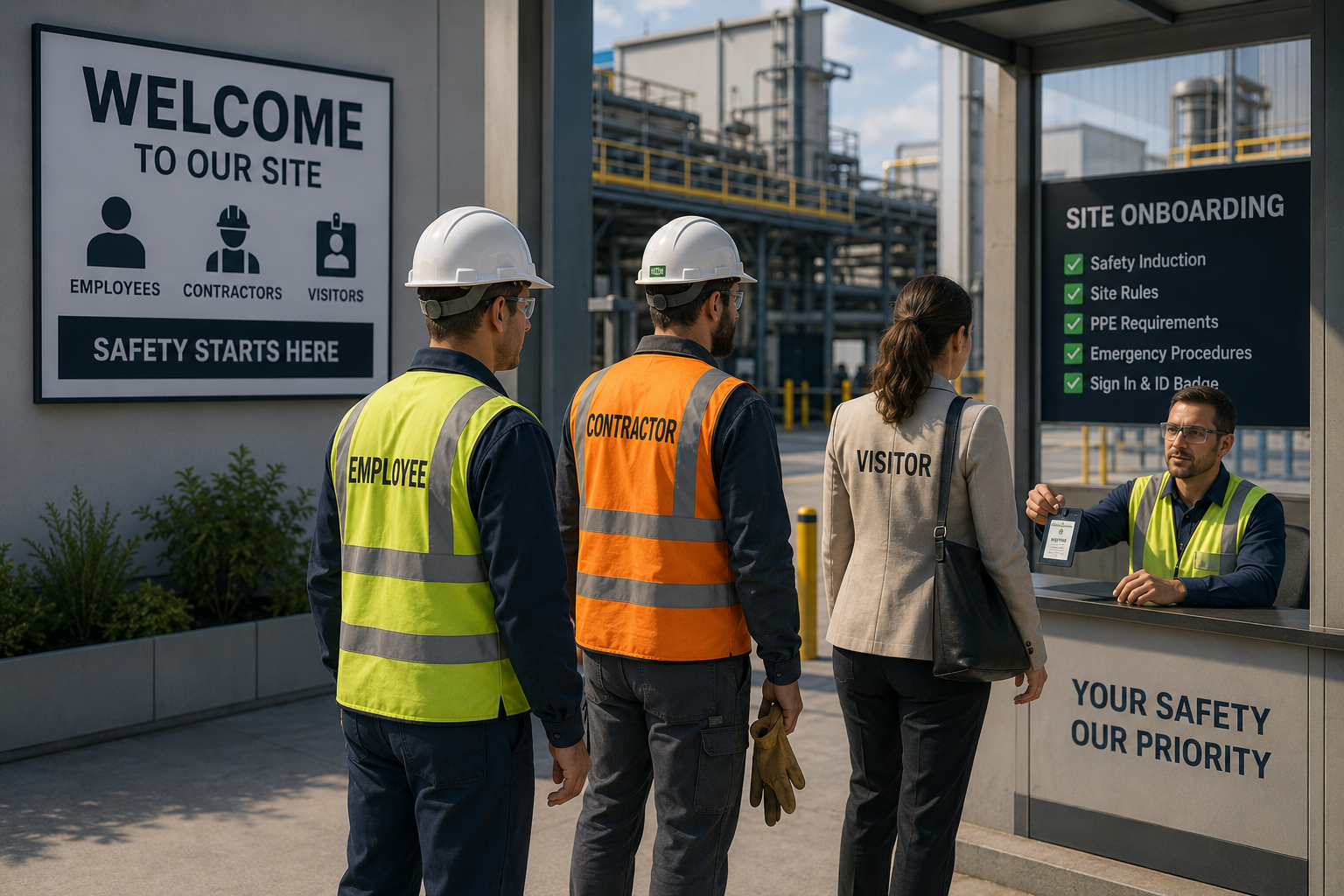
For operations managers, EHS (Environmental Health & Safety) directors, and warehouse supervisors, onboarding new employees, contractors, and visitors is a constant challenge. Every person stepping foot onto a manufacturing plant, construction site, or logistics facility must receive comprehensive safety training.
Traditionally, this meant having a supervisor manually walk groups through safety slides, repeat site rules, and collect signed waivers. This manual process is not only time-consuming and expensive—it also introduces significant liability risks. If a supervisor forgets to mention a single hazard, your business is exposed to regulatory penalties and legal vulnerabilities.
Implementing professional safety induction video production is the most effective way to automate site onboarding, guarantee 100% compliance consistency, and save hundreds of supervisor hours every year.
01. The Core Problem with Manual Safety Briefings
Manual onboarding processes suffer from three major operational vulnerabilities:
-
Inconsistency: Even the best supervisors have off days. They might rush through a briefing, overlook new site hazards, or fail to highlight critical evacuation muster points.
-
Labor Cost Inefficiency: If a supervisor earning $35/hour spends 30 minutes briefing groups of contractors 3 times a week, that is thousands of dollars spent annually just repeating the exact same instructions.
-
Lack of Retention: Reading dry safety manuals or looking at static slide decks does not help workers retain information. Studies show that visual content increases information retention by up to 65%.
02. 5 Essential Elements of a Safety Induction Video
To build a high-performance safety training video, your production team must focus on key components:

-
Site PPE Rules: Hard hats, steel toes, & high-vis gear.
-
Hazard Mapping: Crane lanes & chemical zones.
-
3D Maps: Evacuation paths & muster points.
-
Multi-Language: Global voiceover translations.
Manual Briefing vs. Video Induction: Quick Comparison
| Metric | Manual Supervisor Briefing | Automated Video Induction |
|---|---|---|
| Onboarding Duration | 45 – 60 minutes per group | 8 – 12 minutes automated |
| Compliance Consistency | Varies by supervisor mood | 100% standardized every time |
| Worker Information Retention | Low (~20% retention) | High (~65% visual retention) |
| Annual Labor Expense | $15,000+ supervisor wages | $0 recurring labor cost |
03. Calculating the ROI of Safety Video Automation
Automating your site briefing is a highly measurable investment. Let’s look at a typical manufacturing facility:

-
Contractor Volume: 500 contractors onboarding per year.
-
Manual Briefing Time: 45 minutes per briefing ($40/hr supervisor rate).
-
Annual Labor Savings: 375 hours saved ($15,000+ direct wage recovery).
Ready to Turn Your Product into a High-Converting Story?
At North Animation Studio, we turn complex SaaS products, medical devices, and industrial technology into clear, high-converting visual stories. Calculate your tailored project quote in under 60 seconds.